
Messy drawers waste time and ruin good clothes. Poor folding causes wrinkles, stretched necks, and stacks that fall apart. Most people fold shirts the wrong way and never realize it. A few small changes can save space, protect fabric, and make your closet easier to use every day.
How to fold t shirts the right way is simple once you know the steps. This guide shows clear methods that work for drawers, shelves, and travel. You will learn fast folds, store-style folds, and space-saving options that keep shirts neat and ready to wear.
Things to Do Before Folding T-Shirts
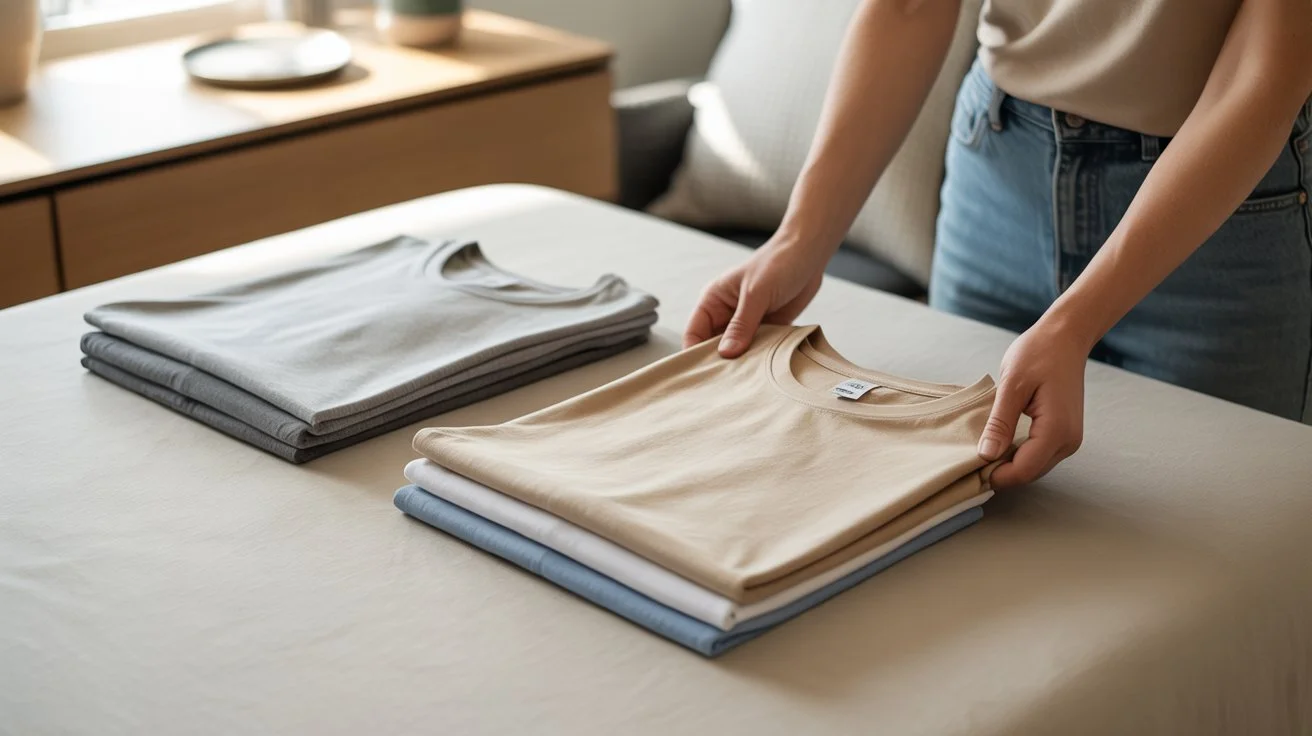
How to Fold T Shirts? A simple method to keep your t-shirts neat, wrinkle-free, and perfectly stacked
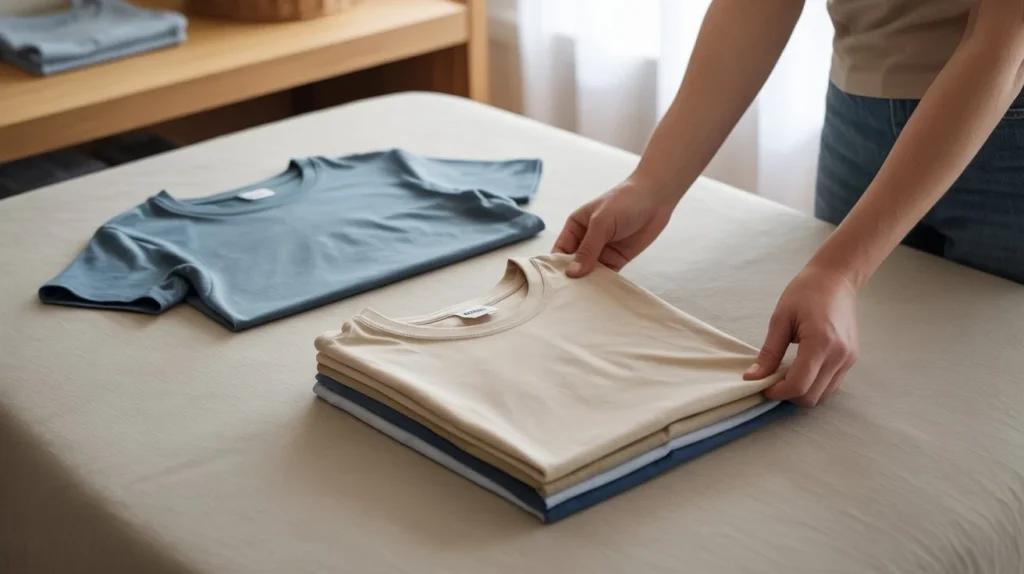
Before you start folding a t shirt, preparation matters more than people think. At Zuhoor, we always begin with a clean, flat surface like a bed or table to avoid unwanted creases. Folding on uneven areas often leads to wrinkles that set into the fabric. Smooth the shirt fully before folding by running your hands over it and gently pulling at the seams. This simple step removes wrinkles naturally and helps the shirt keep a clean shape without ironing.
Check moisture. Shirts must be fully dry. Even slight dampness leads to odor and deep folds that set in fabric.Button or zip if needed. Polo shirts or fashion tees keep shape better when secured.Take five seconds here. It saves minutes later.
Why Folding Method Matters More Than You Think
Different folding styles serve different needs. Drawer storage needs visibility. Shelves need stable stacks. Travel needs compression.Using one method for everything causes clutter. Choosing the right fold keeps shirts crisp longer.
Fabric type also matters. Cotton behaves differently than blends. Heavy embroidery needs extra care.Understanding this makes it easier to choose the best way to fold tee shirts for your space.
Classic Flat Fold (Traditional Method)
Lay the shirt face down on a flat surface and smooth out any wrinkles. Fold one side inward, aligning the sleeve neatly along the body, then repeat on the other side. Once both sides are even, fold the shirt from the bottom up in half or thirds, depending on the drawer or shelf space. This creates a clean, flat rectangle that is easy to stack and simple to learn.
This method is quick and works well for most shirts, especially for shelves and wide drawers. The main drawback is that shirts at the bottom of the stack often get forgotten, and tall stacks can fall over if they become too high.
Retail-Style Fold (Store-Perfect Look)
Clothing stores fold shirts to look clean and uniform. You can do the same at home.
Best for: display shelves and premium shirts
Steps:
- Lay the shirt face down.
- Fold sleeves straight back, not angled.
- Fold sides evenly to form a clean rectangle.
- Fold bottom up once or twice.
This method keeps logos centered and visible.
If you own detailed items like the Embroidered Charm Bow Shirt, this fold protects the design and keeps it front-facing. At Zuhoor, this is how statement pieces are prepared before display.
Tip: Use a folding board for consistent size.
This is one of the best way to fold tee shirts for a polished look.
Vertical Fold (KonMari Method)
This method changes how drawers work.
Best for: small drawers and daily wear shirts
Steps:
- Lay shirt face down.
- Fold sides inward.
- Fold bottom up in thirds.
- Stand the shirt upright.
Each shirt becomes a foldable shirt that stands on its own.
Why it works
- You see every shirt at once
- No more digging
- Less refolding
This method reduces friction in daily routines. It is a favorite for people who want fast access.Many people searching for t shirt how to fold end up switching to this method long term.
Quick Fold Method (Fast Folding Technique)
This method saves time once learned.
Best for: laundry days with many shirts
How it works
You pinch three points on the shirt and flip in one motion.
It takes practice. Start slow. Speed comes later.
Pros
- Very fast
- No tools needed
Cons
- Less precise
- Not ideal for thick fabric
Use this when speed matters more than perfection. It still counts as proper folding a t shirt when done right.
How to Fold T-Shirts for Travel
Travel folding focuses on space and wrinkle control.
Rolling Method
- Lay shirt flat
- Fold sides inward
- Roll tightly from bottom to top
Rolling saves space and reduces creases.
Travel Fold
- Fold into a compact rectangle
- Place heavier shirts at bottom of bag
Avoid overpacking. Pressure causes wrinkles no matter the fold.For long trips, place tissue paper inside folds. It reduces friction.Knowing how to fold t shirts for travel keeps outfits wearable straight from the bag.
Folding Different Types of T-Shirts
Not all shirts behave the same.
Graphic T-Shirts
Graphic T-shirts should be folded so the design stays flat and smooth. Lay the shirt face down and avoid folding directly across the print. Creases over graphics can cause cracking and fading over time. For large prints, a retail-style fold works best and keeps the design protected.
Embroidered Shirts
Embroidered shirts need gentle handling because stitching adds thickness. Use a retail-style fold and keep embroidery facing outward. Never fold directly over stitched areas, as pressure can flatten threads and distort details.
Oversized T-Shirts
Oversized T-shirts create bulk if folded in half. Fold them in thirds instead to keep stacks neat and balanced. This method saves space and prevents piles from tipping over in drawers.
Long-Sleeve T-Shirts
Fold sleeves back along the seams before folding the body. This keeps sleeves flat and avoids thick folds across the chest. Proper sleeve placement helps reduce wrinkles.
Lightweight Tees
Lightweight tees hold shape well but shift in stacks. Vertical folding works best for these shirts. It keeps them visible, wrinkle-free, and easy to grab.
Adjusting technique by type improves results and fabric life.
Drawer and Closet Organization Tips
Folding is only part of staying organized. Sort T-shirts by use, such as sleep, casual, and dress wear. Use drawer dividers to keep folded shirts upright and easy to see. Avoid tall stacks and limit them to five or seven shirts to prevent mess. Rotate shirts by wearing those at the bottom to reduce fabric stress. These simple habits support every method of how to fold t shirts and keep drawers neat and easy to use.
Fabric Care and Longevity Tips
Proper folding helps T-shirts last longer, but care habits matter too. Avoid hanging heavy tees since weight can stretch the collar. Always refold shirts soon after washing because leaving them in baskets sets wrinkles. Do not pack shirts too tightly, as pressure can damage fibers. Wash T-shirts inside out to keep fabric smooth and easier to fold later. These habits protect your clothes and reduce the need for frequent replacements.
Common T-Shirt Folding Mistakes
Even small errors cause problems.
- Folding on wrinkled surfaces
- Ignoring fabric thickness
- Stacking too high
- Folding damp shirts
- Using one method for all storage
Fixing these improves results fast.Most people struggle not because folding is hard, but because habits are wrong.
Conclusion
Learning how to fold t shirts is about more than neat drawers. It saves time, protects clothes, and removes daily frustration. The right fold depends on your space, fabric type, and daily routine. Flat folds work best for shelves, vertical folds suit drawers, and retail-style folds protect premium pieces. Stay consistent with one system to avoid clutter returning.
Once folding fits your lifestyle, organization becomes easy and stays that way. If you need help choosing the right storage solutions or premium wardrobe pieces, contact us for expert guidance and support.
FAQs
Is rolling better than folding?
Rolling works better for travel because it saves space in suitcases and helps limit creases. For everyday home storage, folding is more practical since it keeps shirts organized and easier to access in drawers and on shelves.
How many times should I fold a t-shirt?
Two to three folds are usually enough. Fewer folds keep the shirt flat and prevent bulk. Folding too many times creates thick stacks that wrinkle more easily and take up extra space.
Should I hang or fold t-shirts?
Most T-shirts should be folded instead of hung. Hanging can stretch the neckline and shoulders over time, especially with heavier fabric. Folding helps the shirt keep its original shape longer.
Does the folding method affect wrinkles?
Yes, the folding method makes a big difference. Smoothing the fabric before folding and keeping folds even helps reduce wrinkles. Tight or uneven folds often lead to deep creases that are hard to remove.
Can folding damage prints or embroidery?
Folding can damage prints or embroidery if the shirt is folded directly over the design. Always fold around graphics and stitched areas to avoid cracking prints or flattening embroidery details.